
美味情缘
Beijing likely to receive one-third of annual rainfall in 24 hrs amid Typhoon Dolphin_我的网站

A |

Typhoon Dolphin stopped being numbered at 5 pm on Tuesday, however its impacts continue as it triggered strong winds and heavy rainfall in inland areas as far north as Beijing. The National Meteorological Center (NMC) issued an orange alert for heavy rain, along with blue alerts for severe convective weather. Some areas are expected to see rainfall of 250 to 300 millimeters, CCTV News reported on Tuesday.
The China Meteorological Administration maintained a Level II emergency response on Tuesday as Typhoon Dolphin, its remnants, and cold air were forecast to bring heavy rain to parts of eastern and northern China including Zhejiang, Jiangsu, Anhui, Hubei, Henan, Shandong, Shanxi, Hebei and Beijing over the next three days, CCTV reported.
From Tuesday morning to Wednesday morning, parts of multiple regions including western Jiangsu, north-central Anhui, Henan, central and western Hubei, western and southern Hebei, Beijing, central and western Inner Mongolia, northwestern Heilongjiang, and southwestern Yunnan are expected to experience heavy to torrential rainfall. Some areas in central Henan could see extreme rainfall, with accumulated precipitation reaching 250 to 300 millimeters, according to CCTV.
Beijing activated a Level II flood-control emergency response at 9 am on Tuesday, with authorities at all levels throughout the city mobilizing flood prevention measures, CCTV reported. Meanwhile, the Ministry of Natural Resources launched a Level IV geological disaster defense response for Beijing at 3 pm on Tuesday.
According to the Beijing Meteorological Service's forecast, from Tuesday evening through Thursday, most parts of Beijing will experience heavy rainfall, with accumulated precipitation expected to exceed 100 millimeters in six hours and 150 millimeters in 24 hours.
In seven areas including Tongzhou, Daxing, Fangshan, Mentougou, the Beijing Economic-Technological Development Area, Huairou, and Fengtai, six-hour rainfall totals could exceed 150 millimeters, while 24-hour accumulations could surpass 200 millimeters, CCTV reported.
Beijing receives an average of 528 millimeters of precipitation annually, with most of it typically concentrated between June and September. Therefore the rainfall in 24 hours since Tuesday evening would likely be equivalent to more than one-third of the city's annual rainfall.
Beijing's flood control authorities ordered personnel responsible for urban waterlogging hotspots to take their posts from noon on Tuesday, with drainage equipment and flood barriers pre-positioned.
The city's flood control authorities also ordered the evacuation of people in flood- and landslide-prone areas before 6 pm on Tuesday and required work at construction sites to be suspended and mountain campsites and related tourist attractions to be closed.
Starting Wednesday, Beijing will encourage flexible work arrangements and staggered commuting, while schools may suspend classes and offline training, as well as outdoor teaching activities. Outdoor sports events will be halted, traffic controls imposed in high-risk areas, and public transport adjusted according to weather conditions and safety needs, CCTV reported.
As significant rainfall is expected to begin affecting western and southern parts of Shandong Province on Tuesday, Jinan city has taken precautionary measures in advance, with multiple large and medium-sized reservoirs carrying out controlled pre-releases to create additional flood-control capacity and prepare for rainfall brought by the typhoon, CCTV reported.
In Henan Province, the provincial department of water resources and provincial meteorological service jointly issued a red alert for flash floods at 8 am. It is forecast that from 8 am Tuesday to 8 am Wednesday, some mountainous areas in multiple cities and counties are at relatively high risk of flash flood.
Typhoon Dolphin's impact is far from over despite the typhoon having made landfall twice in Zhejiang. Zhang Fanghua, chief forecaster at the NMC, said on Monday that Dolphin's extensive cloud system and abundant moisture reserves have prevented its residual circulation from dissipating quickly. Instead, the residual circulation is expected to continue moving northward and westward. Over the next week, it is forecast to bring widespread and prolonged heavy rainfall to East China, North China, the Huanghuai region and even Northeast China, with some areas potentially experiencing extreme rainfall, the Science and Technology Daily reported.
Ma Jun, director of the Institute of Public and Environmental Affairs, told the Global Times that as the typhoon moves northward, it could encounter cold air from the north, potentially bringing not only heavy rainfall but also severe convective weather. Such weather can trigger disasters such as flash floods and mudslides, cause urban flooding, and affect farmlands.
。
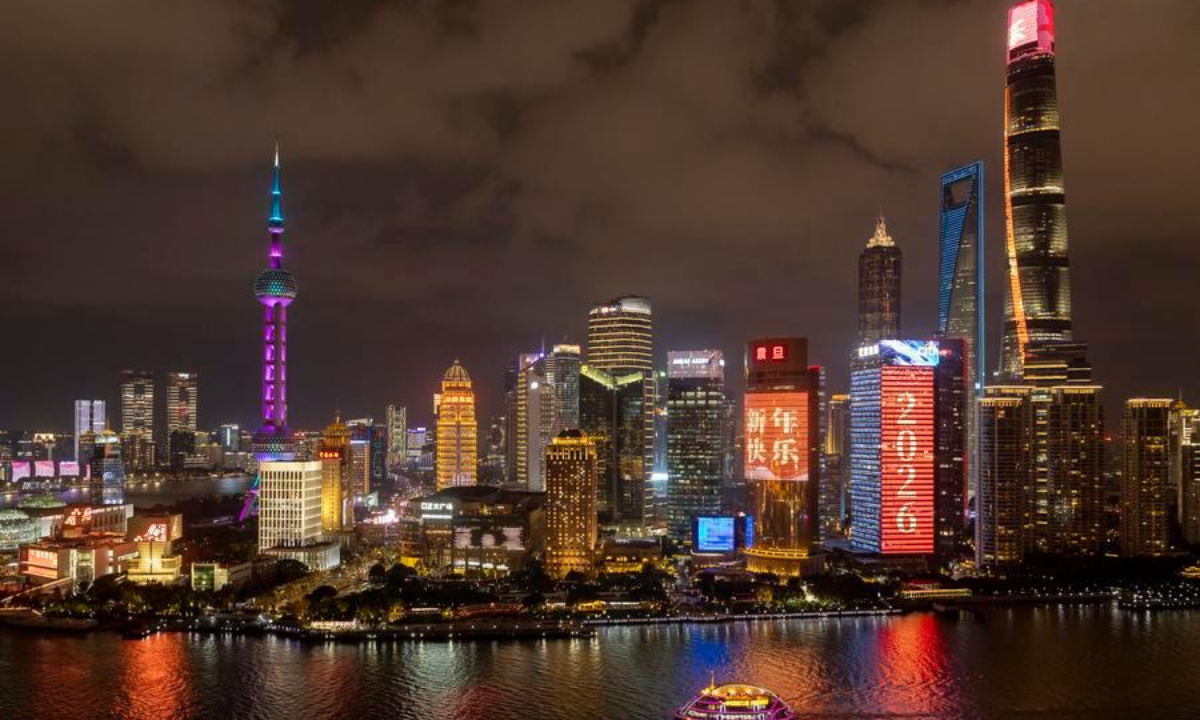
The plan said measures will be taken to "prudently advance high-level financial opening-up," noting efforts will be made to expand the global use of the renminbi in international trade, investment and financing, deepen two-way financial market access, quicken steps to build Shanghai into an international financial center and enhance the role of Hong Kong as a global financial center.
As part of the opening-up drive, the PBOC will enhance the multi-tiered and broad-coverage Cross-Border Interbank Payment System (CIPS) and push forward the development of offshore renminbi markets.
On the domestic monetary policy front, the plan sets out to build a more scientific and robust framework by refining the modern monetary policy system with Chinese characteristics, improving the base-money issuance mechanism, and making better use of both aggregate and structural tools.
It stresses the need to enhance market-based interest rate formation, transmission, and adjustment mechanisms, while allowing the market to play a decisive role in exchange-rate determination and keeping the renminbi broadly stable at a reasonable and equilibrium level.
To fortify financial stability, the central bank will expand the coverage of macro-prudential management, enrich its policy toolkit, and establish a monitoring and evaluation system to mitigate systemic risks in key areas.
A major pillar of the plan is to strengthen the real economy's access to quality financial services. The PBOC has pledged to build a precise and effective policy system to support major strategies, key sectors, and address weak links. This includes developing a financial system tailored to scientific and technological innovation. It also aims to enhance green and low-carbon financing, expand inclusive finance, improve the pension finance system and accelerate digital finance.
Looking ahead to the 2026-2030 period, the PBOC says it will ensure all measures in the plan are executed effectively to boost China's strength in finance and support high-quality economic development.
。
Current article:http://u78by05.yinkataizengquge.bond/jbsnfbe/20260826/4634.html
Published on:04:08:17
我的网站最近更新
- Google Pixel 11 Pro 评测
- 省教育厅厅长王庆东来抚调研
- 医疗保障法草案将三审 拟细化异地就医医药费用结算要求
- 能载客168人 视野开阔还是纯电动的 “千岛湖启程号”游船通过验收
- Traditional Values & Military Glory: Things to Know as Russia Celebrates National Flag Day
- 直到看到这一幕我才明白为什么当年独行侠会交易东契奇了,球迷直言他就是…
- 不想旅行变“修行”?和父母沟通的这些雷区不要踩
- 阿里云智能集团资深副总裁李飞飞 :未来属于AI
- 聚能人 提本领 促发展——江西以文化融合与渠道创新重塑福彩生态
- 国足零封世界杯参赛队!
- 交通部门透露:将在全国范围内安装更多摄像头
- 最新研判:台风“白海豚”可能在苍南到象山一带沿海登陆!杭州机场发布重要提醒:部分航班可能延误或取消
- A$AP Rocky Pleads Not Guilty to Assault Charges in Connection to Hollywood Shooting
- Jaideep Ahlawat on Why Sequels Are Complex at Filmfare OTT Awards 2025 Press Conference
- 贝森特宣布美国对伊朗新一轮制裁措施:制裁范围扩大到航空、数字资产、黄金、航运和技术行业,任何为伊朗洗钱的实体将被移出美元体系
- 国家体育总局体育基金管理中心副主任罗建彬被查
- 韩国银行在华遭诈损失近4亿人民币,内控松懈引争议
- “走进来”取经 “传出去”成果 16省青年“行走杭州”掀起实践热潮
- 离开卡上线不远:小米穿戴设备确认将支持成都天府通 NFC 交通卡
- 注意!雷电黄色预警
- 新闻纵深|河北绿钢,锻造硬核出海竞争力
- 整点开刷!《魔域口袋版》神陨之地激战开启
- 台湾前“深绿”媒体人彭文正表态:不惜代价推动两岸和平统一
- 运动后想喝啤酒又怕白练?青岛轻干让运动后的快乐,不必纠结
我的网站热门资讯
- 得物耐克拖鞋有污还开胶退款遭平台推诿
- 算电协同的真正压力测试,在2030年
- 国内商品期市夜盘收盘涨跌参半,化工品涨幅居前表现突出
- “强国担使命 奋斗书华章”中小学生艺术大赛举行
- 港交所上半年再创佳绩 收入和溢利齐创同期新高
- 检察机关依法对金之镇涉嫌受贿案提起公诉
- 手机靓号进价5000元能卖5万 高峰每月能卖200个号码
- उत्तराखंड में जैविक व प्राकृतिक कृषि उत्पादों की बिक्री के लिए खुलेंगी मंडियां, कृषि मंत्री गणेश जोशी ने बताया पूरा प्लान
- 英特尔披露 Wildcat Lake 处理器:平台 AI 算力最高 40 TOPS,UCIe 多芯片封装
- 被辟谣的“取消中考”,能走进现实吗
- 足坛最不可思议的逆袭!3年从高中生到皇马队史标王
- 桂林夜空电闪雷鸣宛如科幻大片 广西多地强降雨持续!
- 女子称市监局上班间无一人,官方紧急回应 网友:回应比旷工更吃惊
- African developers favor Chinese AI models for lower costs, greater control
- Google Chrome OS测试新的文件管理器:更像主流桌面
- 新三板创新层公司清鹤科技大宗交易折价31.88%,成交金额28.19万元
- 软银集团考虑发行至多200亿美元债券,为投资OpenAI的贷款再融资
- 直营模式筑牢品质底线 一嗨租车打造自驾出行服务标杆
- 首创期货:成本走弱,供应趋增,PTA期价大幅下挫
- すぐ汚れる電子レンジ。汚れないようにしている3つのこと
- 美国已经启动了对伊朗的经济战,不到24小时美改口,美防长:不排除再对伊动武,兵器观察员,原创 美国已经启动了对伊朗的经济战,不到24小时美改口,美防长:不排除再对伊动武
- 高通:苹果首席执行官库克(Cook)认为双方没有讨论和和解的说法是“误导性的”
- 中小商家生意难做,快手618还是离不开辛巴
- 国家防总办公室、应急管理部向河南紧急调拨中央防汛物资 支持做好抗洪抢险工作